Among the ever-growing world of variegated houseplants, few capture attention quite like Philodendron White Wizard. This stunning cultivar, derived from Philodendron erubescens, stands out with its heart-shaped leaves featuring deep emerald-green backgrounds dramatically splashed with large, creamy-white patches and marbling. The bold contrast between the rich green and pure white creates an almost magical, enchanted appearance — which is exactly why this plant earned its captivating name, “White Wizard.”
What truly sets White Wizard apart from its popular relatives (such as White Princess and White Knight) is its distinctive stem pattern: vibrant green with clean white stripes or flecks, completely free of pink, red, or orange tones. As a natural climber, it thrives when given a moss pole or trellis, rewarding patient growers with increasingly larger leaves and more intense variegation over time.
Philodendron White Wizard is one of the most stunning variegated houseplants available today. This hybrid cultivar (scientifically a form of Philodendron erubescens) features dramatic heart-shaped leaves with deep green backgrounds splashed with large, creamy-white patches and marbling — giving it a truly magical, almost enchanted appearance that earned it the “White Wizard” name.
The most distinctive identifying feature is the stem: green with white stripes or flecks, without any pink, red, or orange tones. This sets it clearly apart from its famous relatives. The plant is a natural climber — when provided with a moss pole or trellis, it quickly grows upward, producing larger and more impressive leaves with stronger variegation.
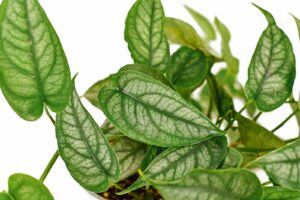
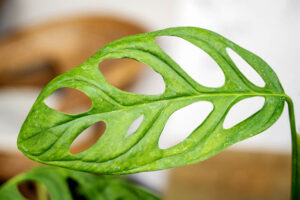
Here are some beautiful close-up views of the leaves showing the striking variegation:
White Wizard vs White Princess vs White Knight – Quick Comparison
These three variegated philodendrons are often called the “Triple Crown” of white philodendrons, but they differ noticeably:
- White Wizard → Green + white striped stems | Large, bold white patches (often covering half or more of the leaf) | Stable variegation | Medium-slow growth
- White Princess → Pink/reddish stems | Smaller, splash-like white spots | Faster growth
- White Knight → Dark pink/red stems | Very heavy white coverage (sometimes almost fully white) | More sensitive — variegation fades easily in low light
Side-by-side comparisons make the differences crystal clear:
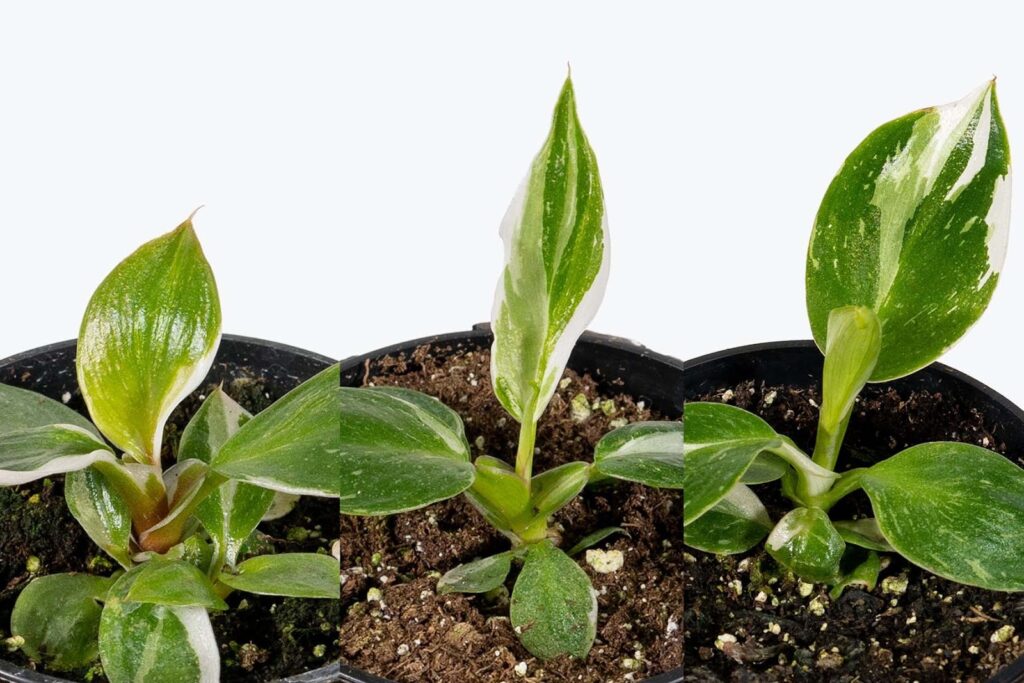
Complete Care Guide
White Wizard is relatively easy to care for, similar to other philodendrons, but maintaining that beautiful variegation requires a little extra attention.
- Light — Bright indirect light is ideal. Place it near an east or west-facing window with soft morning or filtered afternoon sun. Avoid direct harsh midday sun (it can scorch leaves). Too little light causes variegation to fade or revert to solid green.
- Watering — Water when the top 2–3 inches of soil feel dry. Never let it sit in standing water — overwatering quickly leads to root rot. Reduce frequency in winter.
- Soil & Pot — Use a well-draining, airy mix: roughly 50% peat/coco coir, 30% perlite/orchid bark, 20% charcoal/pumice. Always choose a pot with drainage holes.
- Humidity & Temperature — Prefers 60–80% humidity (use a pebble tray, humidifier, or mist regularly). Ideal temperature range: 18–27°C (65–80°F).
- Support — A moss pole makes a huge difference. It encourages climbing, bigger leaves, and better variegation.
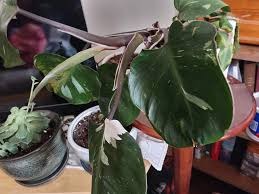
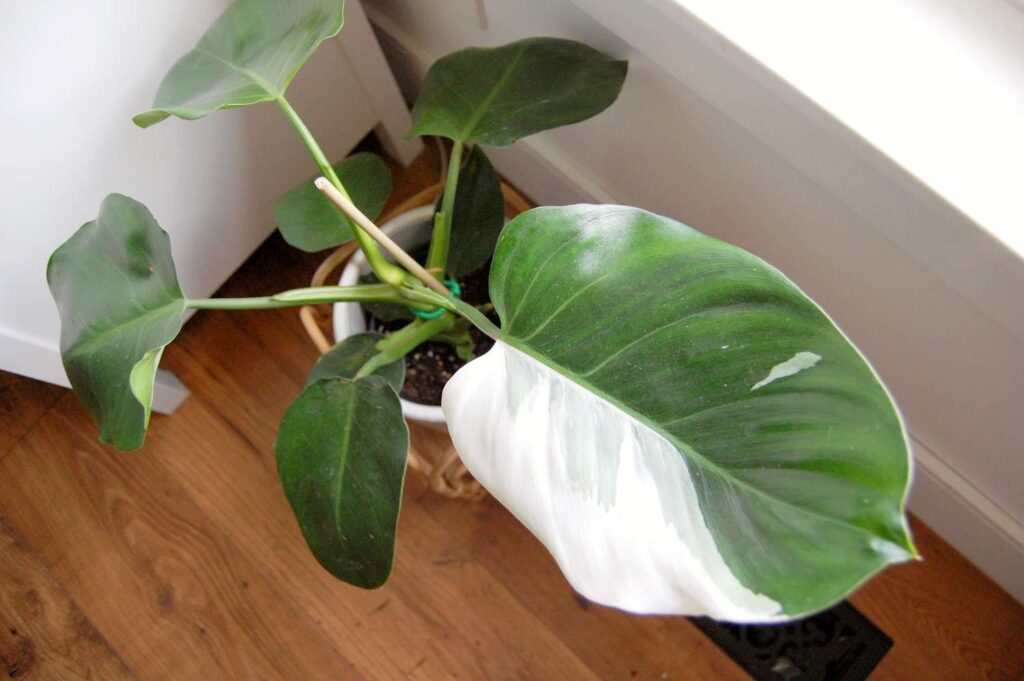
A mature White Wizard climbing a moss pole looks absolutely spectacular:
Propagation
The easiest method is stem cuttings — take a healthy stem with at least 1–2 nodes (the bumps where leaves and roots emerge).
- Water propagation — Place in water; roots usually appear in 2–4 weeks.
- Sphagnum moss — Best for variegated plants. Wrap the cutting in moist sphagnum, place in a plastic bag for high humidity — success rate often 90%+.
- Tips — Do it in spring/summer. Always include an active node. Keep humidity high during rooting.
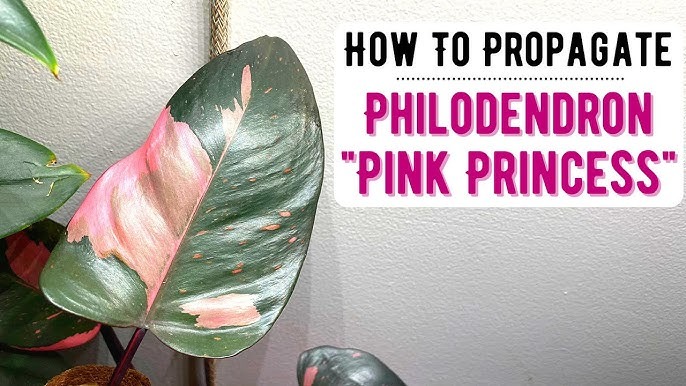
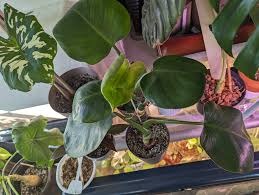
Propagation example (stem cutting in moss):
Common Problems & Solutions
- Yellow leaves → Usually overwatering/root rot. Check roots, trim any mushy parts, and repot in fresh dry mix.
- Brown tips → Low humidity or tap water chemicals (let water sit 24 hours to off-gas chlorine).
- Fading variegation → Increase light exposure.
- Pests (spider mites, mealybugs) → Treat with neem oil or insecticidal soap.
Toxicity
Like most philodendrons, White Wizard is toxic to pets and humans if ingested due to calcium oxalate crystals. It can cause mouth irritation, swelling, and difficulty swallowing. Keep it out of reach of cats, dogs, and small children.
In the end, Philodendron White Wizard is far more than just another trendy houseplant — it’s a true living masterpiece that brings a touch of magic and elegance to any indoor space. With its bold creamy-white variegation contrasting against rich dark green leaves, stable growth habits, and that signature green-and-white striped stem, it stands out as one of the most rewarding and visually captivating members of the “royal” white philodendron family.
While it demands bright indirect light and consistent humidity to maintain its stunning patterns, its care remains forgiving and straightforward compared to many other rare aroids. Whether you’re nurturing a small cutting or watching a mature specimen climb proudly up a moss pole, the journey with White Wizard is one of quiet joy and impressive rewards.