
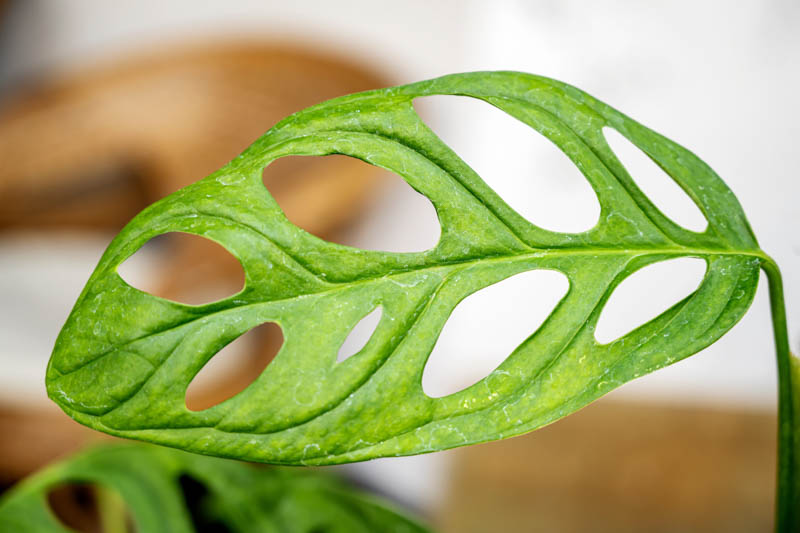
Among plant collectors, Monstera obliqua remains the ultimate dream plant. Its leaves look like nature decided to create lace — with extreme fenestration where holes can take up 80-95% of the leaf surface, leaving only thin green veins behind. This breathtaking beauty has earned it the nickname “the unicorn of the plant world.
But beware: in 2025, the vast majority (99%) of plants sold as “obliqua” are actually Monstera adansonii. Authentic obliqua is extremely rare, expensive, and demands expert-level care.
Here are some stunning close-ups of real Monstera obliqua Peru form showing that iconic lace-like fenestration:
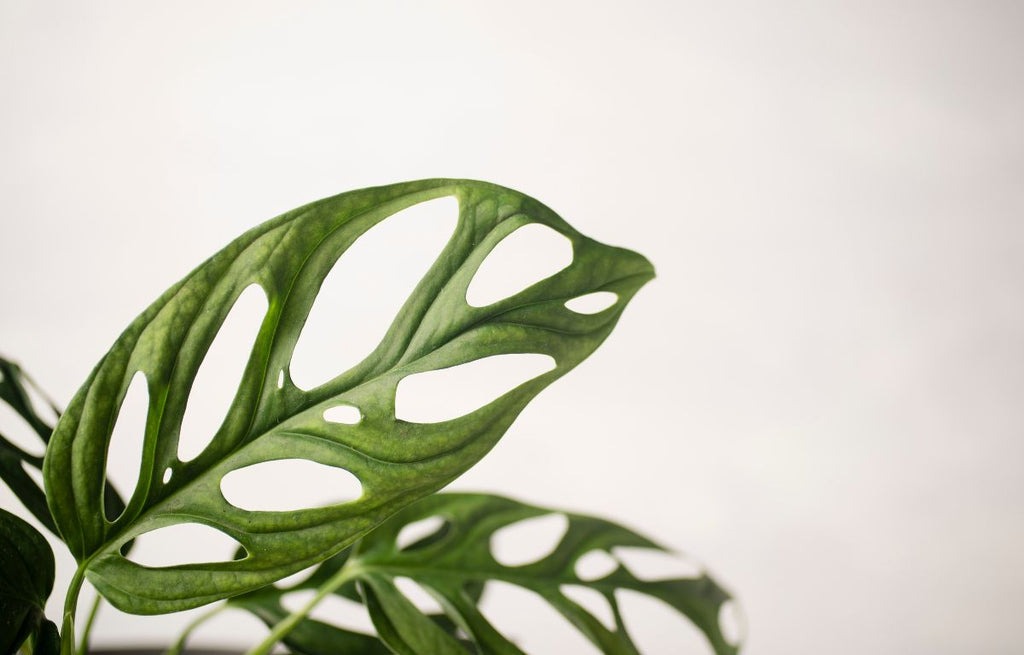
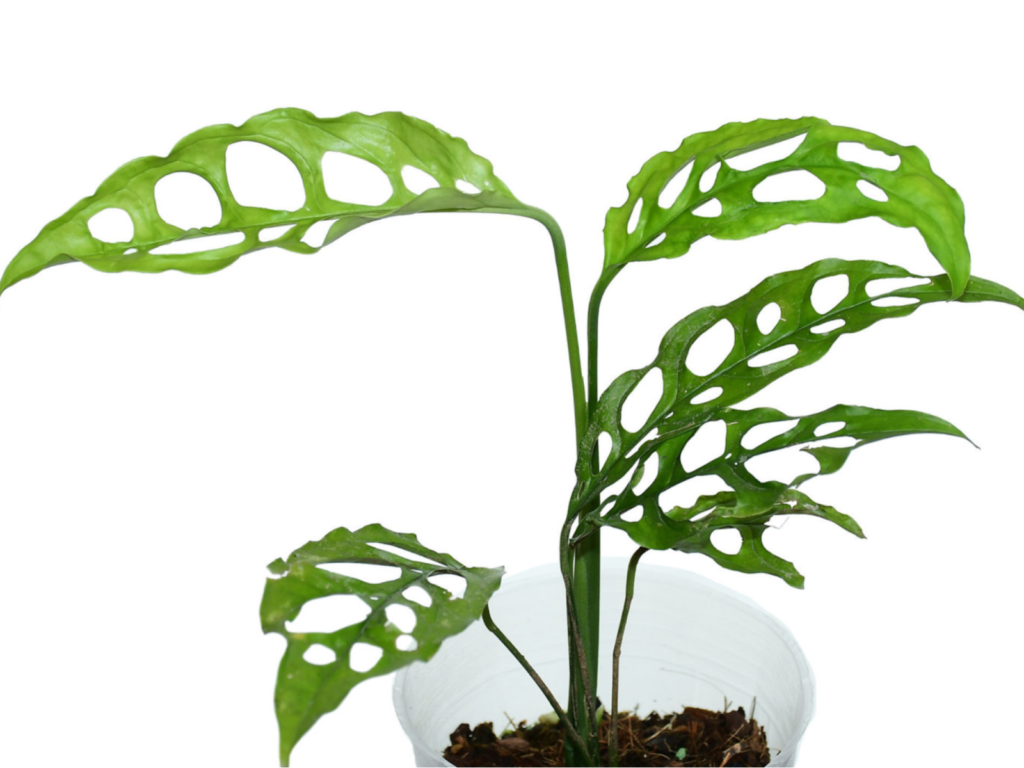
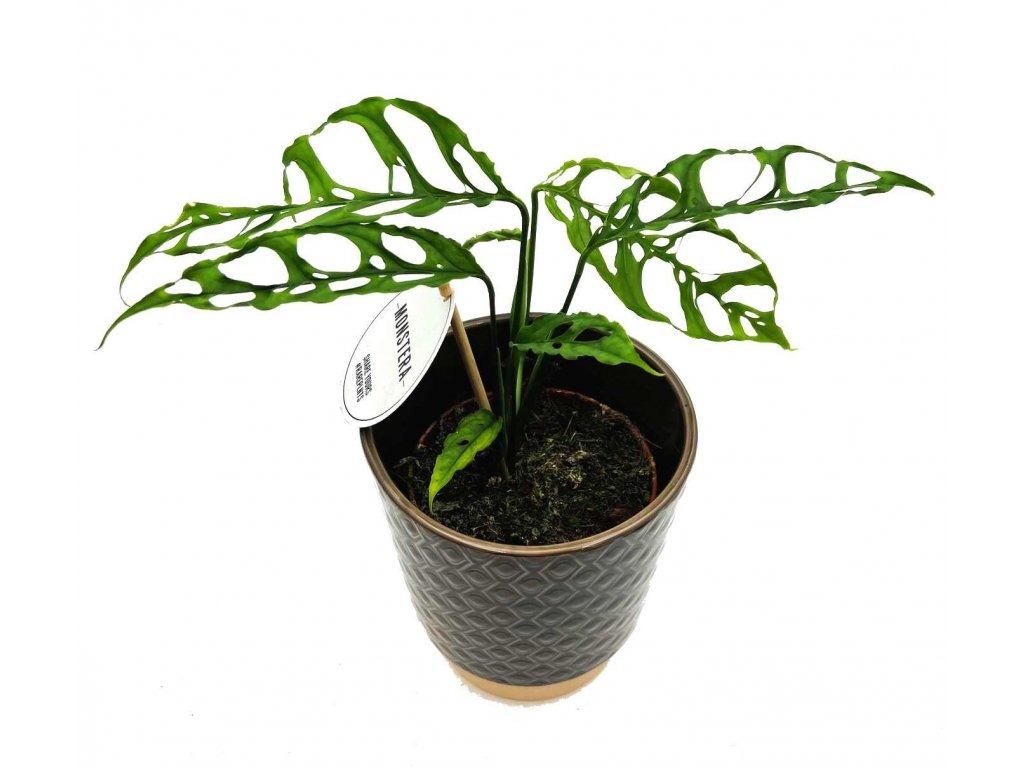
What is Monstera obliqua? – Identification & Characteristics
Monstera obliqua is a climbing epiphyte from the Araceae family, native to the rainforests of Central and South America — especially Peru, Colombia, Brazil, and Bolivia. The most famous and sought-after form is ‘Peru’, with paper-thin, almost transparent leaves and the highest degree of fenestration. Mature leaves typically stay small to medium (10–25 cm), growth is extremely slow, and the plant climbs using a moss pole or tree trunk while producing long leafless runners (stolons).
The Biggest Confusion: Real obliqua vs Monstera adansonii
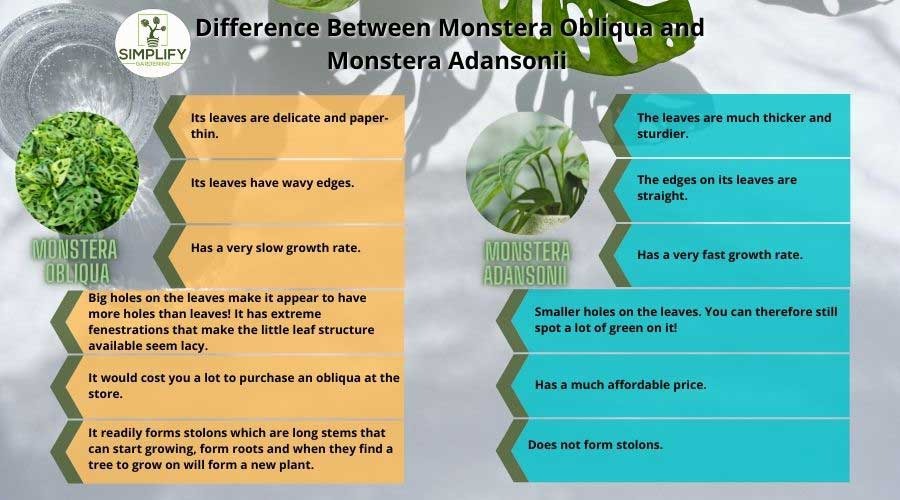
Without this comparison, no obliqua article is complete. Here are the key differences:
| Feature | Real Monstera obliqua (esp. Peru form) | Monstera adansonii |
| Fenestration | 80–95% holes, true lace/net appearance | 30–60% holes, more green tissue remains |
| Leaf thickness | Extremely thin, almost paper-like & transparent | Thicker, leathery texture |
| Mature leaf size | Small-medium (10–25 cm) | Much larger (up to 50–75 cm) |
| Growth rate | Very slow | Fast |
| Leafless runners (stolons) | Very long & numerous | Few or none |
| Humidity requirement | 80–95% (terrarium almost mandatory) | 60–75% (tolerates average rooms) |
| Price (2025) | Cuttings $100–$1000+ (often much higher) | $10–$50 |
Visual side-by-side comparison (left: adansonii / right: real obliqua):
Care Guide: How to Keep Authentic obliqua Alive
This plant is only for experienced collectors. Without the right conditions, it will quickly decline.
- Light: Bright indirect (never direct sun). Too little light stops growth completely.
- Humidity: 80–95%. A glass terrarium, cabinet, or high-end humidifier + humidity tray is essential. Average room humidity is usually fatal.
- Watering: Keep soil lightly moist at all times — but avoid overwatering (root rot is deadly). Water when top 1–2 cm feels dry.
- Soil: Very airy mix — orchid bark + perlite + sphagnum moss.
- Temperature: 22–28°C (never below 18°C).
- Support: Moss pole required for climbing — this encourages larger, more fenestrated leaves.
- Fertilizer: Very dilute, only during growing season (once a month max).
Common issues: spider mites (less likely in high humidity), leaf drying (low humidity), root rot (overwatering).
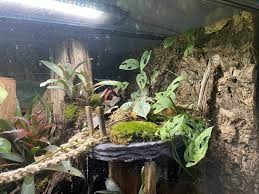
Here are examples of authentic obliqua thriving in high-humidity terrarium setups:
Why Is It So Expensive & Rare?
Wild populations are limited, growth is painfully slow, and propagation is difficult. In 2025, a small authentic Peru cutting still regularly sells for hundreds to thousands of dollars (sometimes much more for established plants). Always check seller reviews, origin proof, and real photos. If the price seems too good to be true — it almost certainly is fake.
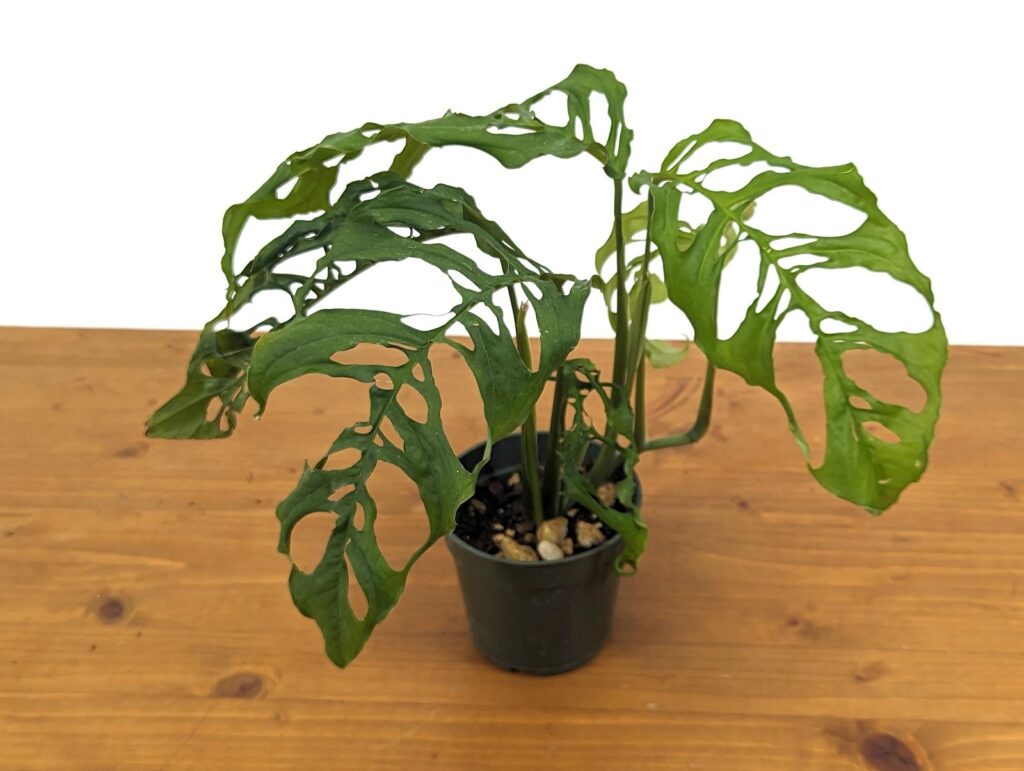
Here are some examples of genuine rare obliqua plants currently listed for sale:
Ultimately, Monstera obliqua isn’t for everyone — and that’s precisely what makes it so captivating. If you’re drawn to its mystique and prepared to meet its exacting needs, it offers a depth of connection that transcends ordinary plant keeping. For the rest, its more forgiving cousins provide similar beauty without the high-stakes devotion. Either way, the journey reminds us that some of the most beautiful things in life demand our very best.